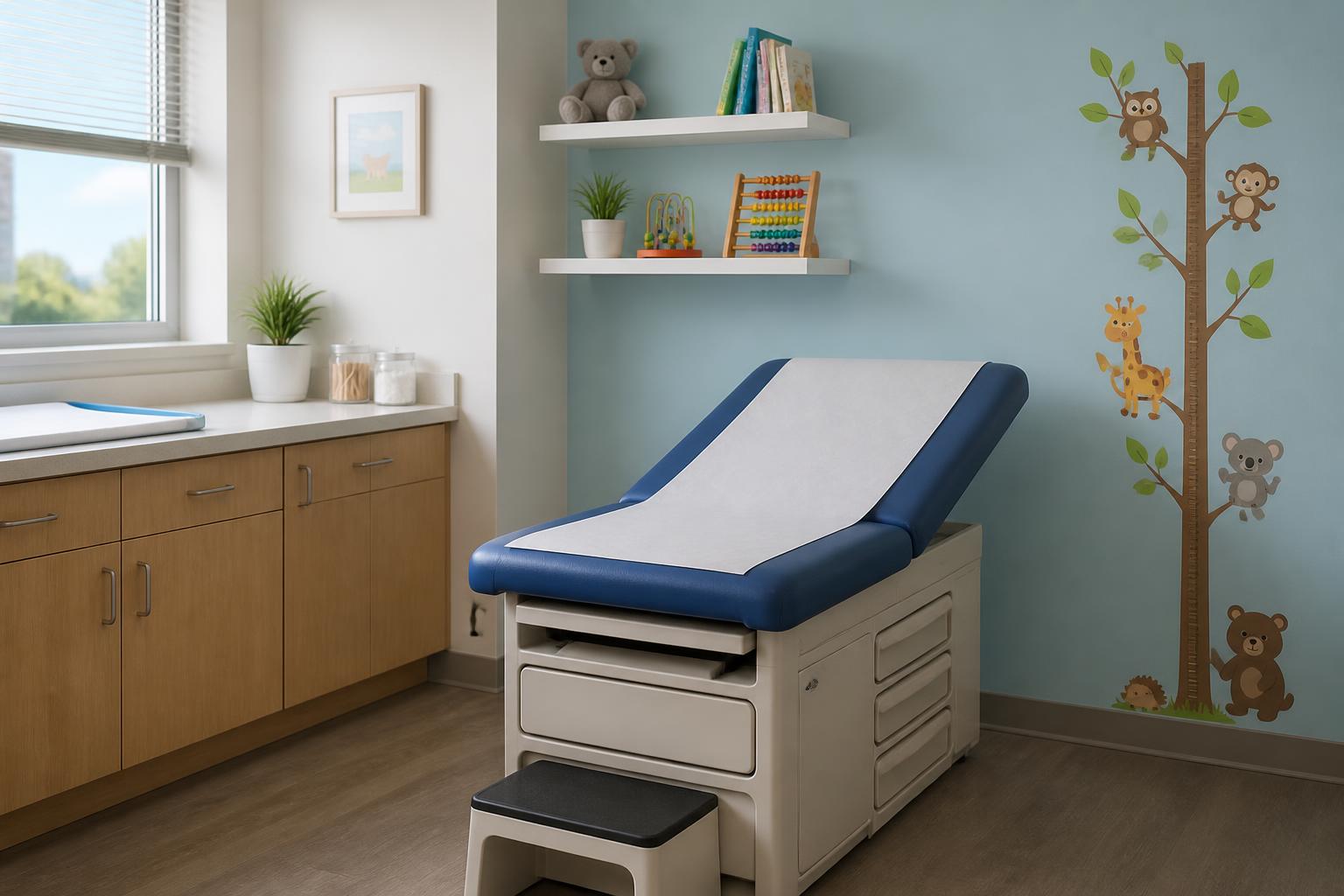
If your child seems well but still needs a checkup, a well-child visit is the right next step. These visits help track growth, review development, and keep routine care on schedule before small concerns turn into bigger questions.
At Amita Jain, MD, families in San Diego, CA can count on attentive pediatric care for these regular visits. We use each appointment to check your child’s progress, discuss day-to-day concerns, and make sure the next steps for care are clear.
A well-child visit is a routine appointment for children who are not sick and need preventive care. The focus is on understanding how your child is growing, eating, sleeping, learning, and adapting at each stage. These visits also give parents a chance to ask questions that may not come up during a rushed day at home.
During a visit, the conversation often covers what is changing since the last appointment and what to watch for before the next one. If your child is due for routine vaccines, growth tracking, or age-based screening, that can be addressed during the same visit when appropriate.
Well-child visits are not one-size-fits-all. A newborn’s needs are very different from a school-age child’s or a teenager’s, so the focus changes as your child grows. That is one reason routine visits matter across the full pediatric journey.
Amita Jain, MD provides age-appropriate care for children and adolescents in San Diego, CA. We tailor each appointment to what matters most at that stage, whether that means feeding and sleep for a baby, school readiness for a child, or privacy and health habits for an adolescent.
For babies, visits often focus on feeding, weight gain, sleeping patterns, diaper output, and early development. Parents commonly use these visits to talk through newborn behavior and to confirm what is expected during the first months.
For older children, appointments often shift toward growth, school performance, activity levels, mood, and social development. For adolescents, the conversation may include independence, healthy habits, and questions they may not want to ask at home.
One of the main reasons for routine well-child care is to make sure growth and development stay on track. Small changes over time can be more informative than a single day’s observation, especially when a child seems healthy but parents notice shifts in appetite, energy, or behavior.
We use each visit to look at your child as a whole. That means more than a height and weight check. It includes how they are interacting, moving, communicating, and responding to the world around them.
Many parents leave a well-child visit wishing they had asked one more thing. A short list before the appointment can help you use the time well and make sure your concerns are heard.
Think about what has changed since the last visit and what you want to understand better. If your child has a new habit, a school issue, a feeding question, or a sleep concern, it is worth bringing up.
Well-child visits are a practical time to stay current with routine preventive care. Depending on your child’s age and history, the visit may include vaccine review or screening questions that help catch concerns earlier.
If something needs follow-up, we explain it clearly and keep the next step simple. Parents often appreciate having one appointment where growth, development, preventive care, and questions can all be reviewed together.
Routine care works best when it stays on schedule. Keeping visits current makes it easier to follow your child’s development and address concerns while they are still manageable.
Families often put off checkups when a child seems fine, but routine visits are still useful even when there is no obvious problem. They help keep records current and give you a chance to ask questions before you are worried or rushed.
If you are trying to fit care into a full schedule, a well-child visit can be a practical way to handle several needs at once. That may include a growth check, a development review, discussion of habits at home, and any routine preventive care that is due.
At Amita Jain, MD, the goal is to make the visit clear and manageable for families in San Diego, CA. You can call 858-882-8350 to ask about scheduling and plan the visit that fits your child’s needs.
A little preparation can make the appointment smoother and help you remember what you wanted to cover. Bringing a few notes can be especially helpful if your child has several changes to discuss.
The visit schedule changes with age. Babies need more frequent appointments early on, while older children and teens usually need routine checkups at regular intervals.
Yes. Well-child visits are a good time to discuss behavior, attention, learning, peer issues, and anything else affecting your child’s day-to-day life.
That is exactly when a routine visit can still help. Preventive care is about watching growth and development over time, not just responding to visible problems.
Yes. Teen visits are important for growth tracking, health guidance, and giving older children space to ask questions about their changing needs.
That is often helpful. A short list keeps the visit focused and makes it easier to cover feeding, sleep, school, behavior, and preventive care.
Often it can. The visit is a useful time to review what is due and discuss age-based preventive care for your child.
Families looking for well-child visits in San Diego, CA want care that is easy to access and straightforward to use. The office at 9333 Genesee Ave UNIT 170 serves the local community with in-person pediatric visits focused on routine care and parent questions.
If you are ready to schedule, contact Amita Jain, MD at 858-882-8350. Well-child visits are a simple way to stay connected to your child’s health and keep preventive care moving forward.